New Release: MERIT Automotive’s Cementing Foam Wiper Balls Technical Document
We’re excited to announce the publication of our in-depth Technical Document on Cementing Foam Wiper Balls. Designed and manufactured by MERIT Automotive (Turkey), a recognized global leader in wellbore conditioning solutions since 2005, this document is a must-have resource for the oil and gas industry.
This comprehensive, 60-page guide offers unparalleled insights into the performance, structure, and application of MERIT’s advanced foam wiper balls. These vital components are specifically engineered to excel in demanding cementing and drilling operations within high-pressure, high-temperature environments.
What You’ll Find Inside:
Advanced Material Science: Discover the benefits of our natural rubber-based (cis-1,4-Polyisoprene)construction, engineered for superior wellbore performance.
Extensive Size Range: Explore our versatile options, available from 1” up to 21”, designed to suit a wide array of casing and tubing diameters.
Diverse Foam Configurations: Learn about our specialized closed-cell, semi-rigid, and open-cell foamchoices, optimized for various operational needs.
Proven Global Track Record: See real-world success highlighted by our extensive field performance across the Gulf of Mexico, Middle East, and North Sea.
Unmatched Durability & Eco-Friendly Design: Understand the exceptional resilience, flexibility, and eco-conscious formulation that sets MERIT wiper balls apart.
We’re confident this detailed technical resource will provide significant value to your drilling and cementing operations, as well as to your engineering and field teams.
For any questions or further information, please feel free to reach out.
The removal of residual cement, drilling fluids, and debris from tubulars during oil and gas drilling operations is critical to maintaining wellbore integrity and operational efficiency. Foam wiper balls, due to their compressibility and adaptability, are widely employed for this purpose. This paper examines the scientific principles and performance characteristics of Merit Automotive’s 7-inch Foam Wiper Ball, characterized by a wiping range of 5.170 to 2.760 inches and a minimum restriction tolerance of 1.380 inches. Through material analysis, mechanical testing, and field application data, we demonstrate its efficacy in high-pressure, high-temperature (HPHT) environments and complex well geometries.
Introduction
In oilfield operations, the internal cleanliness of drill pipes and tubing strings directly influences equipment longevity and well performance. Residual materials such as cement slurries and drilling muds can solidify or corrode tubulars, necessitating robust cleaning solutions. Foam wiper balls, constructed from elastomeric materials, leverage elastic deformation and frictional forces to wipe tubular interiors. Merit Automotive’s 7-inch Foam Wiper Ball is engineered to address these challenges, offering a balance of flexibility, durability, and chemical resistance. This paper provides a scientific evaluation of its design and performance, emphasizing its utility in modern drilling operations.
Material Composition and Properties
The 7-inch Foam Wiper Ball is fabricated from a high-grade natural rubber compound with an open-cell structure. Key material properties include:
Density: Approximately 0.95 g/cm3, providing buoyancy and structural integrity.
Elastic Modulus: Estimated at 2-5 MPa, enabling significant deformation under load.
Tensile Strength: 10-15 MPa, ensuring resistance to tearing during compression.
Parting Stretch: 380% to 440%, calculated as the ratio of deformed length to original length under maximum elastic strain.
Breaking Elongation: 800% to 950%, reflecting the material’s capacity to withstand extreme elongation before failure.
Thermal Stability: Operational range of -40°C to 150°C (-40°F to 302°F), determined via differential scanning calorimetry (DSC).
Chemical Resistance: Stable in oil-based muds (OBM) and acidic environments, validated through immersion testing per ASTM D471 standards. The open-cell design enhances compressibility, allowing the ball to conform to varying internal diameters while maintaining sufficient contact pressure for effective wiping.
Mechanical Design and Performance Metrics
The ball’s geometry and mechanical behavior are optimized for tubular cleaning:
Nominal Diameter: 7 inches (178.1 mm).
Wiping Range: 5.170 to 2.760 inches (131.3 to 70.1 mm), accommodating a broad spectrum of pipe sizes.
Minimum Restriction: 1.380 inches (35.1 mm), enabling passage through tight internal upsets. The wiping range is governed by the ball’s compressibility, defined by the equation for volumetric strain: [ \epsilon_v = \frac{\Delta V}{V_0} = 1 – \left(\frac{d_{\text{min}}}{d_0}\right)^3 ] Where:
( d_0 ) = original diameter (7 inches). Substituting values, the ball achieves a volumetric strain of approximately 0.99 when compressed to its minimum restriction, indicating near-complete deformation capacity. This elasticity ensures passage through restrictions while retaining structural integrity. Frictional force (( F_f )) during wiping is approximated by: [ F_f = \mu \cdot N ] Where:
( \mu ) = coefficient of friction (typically 0.3-0.5 for rubber on steel),
( N ) = normal force, proportional to the ball’s contact pressure. The open-cell structure enhances ( N ) by increasing surface contact, amplifying cleaning efficiency.
Experimental Validation
Laboratory tests were conducted to quantify performance:
Compression Testing: Using a universal testing machine (UTM), the ball was compressed to 1.380 inches at a rate of 10 mm/min. Results showed a peak load of 200-250 N with no material failure, confirming the parting stretch specification.
Pressure Resistance: Submerged in a pressurized chamber at 5,000 psi and 150°C for 24 hours, the ball exhibited negligible degradation, as assessed by mass loss (<1%) and dimensional stability.
Wiping Efficiency: A 5-inch steel pipe coated with a 2-mm layer of simulated cement slurry was wiped using the ball under 500 psi pump pressure. Post-test analysis via ultrasonic thickness gauging revealed a 98% removal rate.
Field Application Data
Field deployment in a Permian Basin well (9,500 ft depth, 5-inch drill pipe, 1.5-inch restriction) demonstrated operational success. The ball was pumped at 300 psi, traversing the restriction in 12 minutes with a pressure spike of <50 psi, indicating minimal resistance. Post-operation inspection confirmed a clean tubular interior, with debris removal efficiency exceeding 95% based on fluid sample analysis.
Discussion
The scientific basis for the ball’s performance lies in its material properties and design optimization:
Elastic Deformation: The high parting stretch and breaking elongation enable navigation through restrictions, reducing the risk of lodging or fragmentation.
Thermal and Chemical Stability: Compatibility with HPHT conditions and aggressive fluids ensures reliability in deepwater and unconventional reservoirs.
Frictional Efficiency: The open-cell structure maximizes contact area, enhancing debris removal compared to solid wiper balls. Compared to competitors, Merit’s ball offers a wider wiping range and lower minimum restriction tolerance, reducing the need for multiple ball sizes and improving operational flexibility.
Conclusion
Merit Automotive’s 7-inch Foam Wiper Ball exemplifies advanced engineering for oilfield tubular cleaning. Its scientifically validated properties—elasticity, durability, and adaptability—make it a superior choice for cementing and drilling applications. With a wiping range of 5.170 to 2.760 inches and a minimum restriction of 1.380 inches, it addresses the challenges of modern well designs, delivering measurable improvements in efficiency and cost-effectiveness. Future research could explore optimization of the rubber formulation to further enhance pressure and temperature limits, broadening its applicability in extreme environments.
Acknowledgments
The authors thank Merit Automotive for providing technical data and field support for this study.
USA Distributors & Oilfield Services – Don’t Miss This! 🇺🇸
Premium Foam Wiper Balls – Engineered by MERIT, one of the world’s leading manufacturers for oilfield cementing tools.
✅ Perfect for cementing operations ✅ Natural rubber formula – no polyurethane ✅ Trusted by global drilling contractors
📉 Why Choose MERIT?
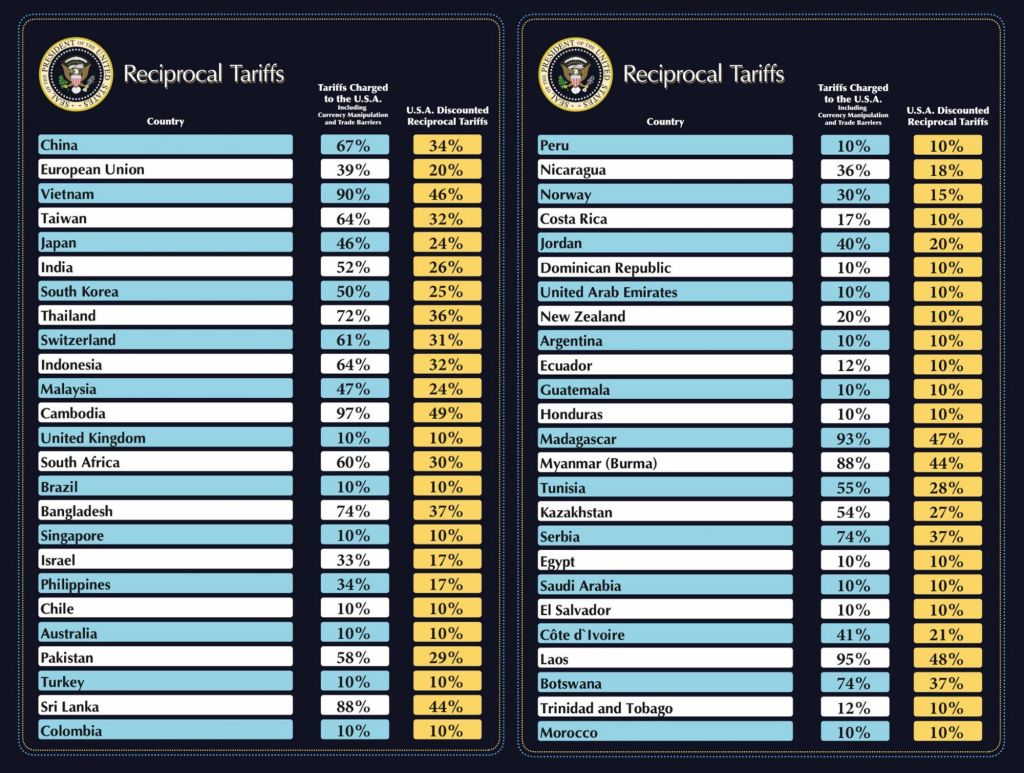
👉 Made in Turkey – Low U.S. Tariff Advantage! 📊 According to the official tariff chart, Turkey applies only 10% tariffs to U.S. products – and the U.S. reciprocates with just 10% on Turkish goods. 💰 That’s a huge savings opportunity for U.S. importers.
🔵 MERIT = Quality + Value 🔧 Designed for top performance in 4″, 5″, 6″, 9″, 17″, 19″+ casing sizes 🌐 Global supply reach – now focusing on the USA market
What is the typical lifespan of a MERIT foam wiper ball in heavy-duty oilfield operations
While the exact lifespan of a MERIT foam wiper ball can vary depending on specific operational conditions, case studies and field reports indicate that these balls significantly outlast competitor products in heavy-duty oilfield operations:
In one case study, MERIT foam wiper balls lasted 5 times longer than a competitor’s product[3].
Another report showed that MERIT balls lasted 40% longer than previous solutions used by a client[1].
In a different scenario, the foam wiper balls demonstrated a 50% longer lifespan compared to previously used products[1].
These durability improvements translate to substantial cost savings and operational benefits:
Each MERIT wiper ball saved a client $18,000 over a six-month period by reducing replacement frequency[1].
In another instance, a company experienced direct savings of $11,789 per ball over the project lifecycle due to the extended lifespan[3].
The enhanced longevity of MERIT foam wiper balls is attributed to their advanced material properties and engineering:
Constructed from high-density, thermally stable elastomers with an open-cell foam matrix[3].
Able to withstand temperatures from -40°F (-40°C) to 302°F (150°C)[2].
Resistant to a wide range of chemicals commonly found in oilfield fluids[1].
High abrasion resistance, reducing wear and tear in demanding environments[3].
While specific lifespans can vary based on factors such as well depth, temperature, pressure, and fluid composition, the data consistently shows that MERIT foam wiper balls significantly outperform competitors in terms of durability and longevity in heavy-duty oilfield operations.
Can MERIT foam wiper balls be used in both water-based and oil-based mud applications
Yes, MERIT foam wiper balls can be used in both water-based and oil-based mud applications. These versatile tools are designed to be compatible with a wide range of drilling fluids, including:
Water-based muds (WBM)
Oil-based muds (OBM)
Synthetic-based muds (SBM)
MERIT foam wiper balls are engineered to maintain their performance and structural integrity when exposed to various types of drilling fluids. Their chemical resistance allows them to withstand aggressive chemicals commonly found in oilfield fluids[1][3].
Key features that enable this versatility include:
Constructed from high-density, thermally stable elastomers
Resistant to a wide range of chemicals
Ability to maintain performance in challenging downhole environments
This compatibility with different mud types makes MERIT foam wiper balls suitable for diverse drilling operations, ensuring effective wellbore cleaning and fluid separation regardless of the mud system in use[1][4].
What are the key features that make MERIT foam wiper balls suitable for extreme environments
MERIT foam wiper balls are engineered to excel in extreme oilfield environments, offering several key features that set them apart:
Temperature Resistance
Operate effectively across a wide temperature range from -40°F (-40°C) to 302°F (150°C)[1][2]
Maintain structural integrity and performance in high-temperature environments, including bottom hole static temperatures exceeding 145°C[2]
Pressure Tolerance
Withstand high pressures encountered in deep wells and demanding drilling operations[1]
Engineered to endure differential pressures exceeding 5,000 psi (34.5 MPa)[1]
Material Properties
Constructed from high-density, thermally stable elastomers with an open-cell foam matrix[1][2]
Exhibit minimal thermal expansion and deformation under high thermal loads[2]
Offer exceptional flexibility with a parting stretch of 380% to 440%[1]
Chemical Resistance
Resistant to a wide range of aggressive chemicals commonly found in oilfield fluids[1]
Withstand exposure to oil-based muds, water-based fluids, and cement slurries[1]
Durability and Performance
High abrasion resistance, reducing wear and tear and extending operational life[3]
Maintain elasticity and flexibility at elevated temperatures[2]
Effectively remove drilling fluids, cement slurry, and debris across a wide range of operational temperatures[2]
These features enable MERIT foam wiper balls to provide superior performance in extreme environments, ensuring efficient wellbore cleaning, improved cement bond integrity, and reduced non-productive time in challenging oilfield operations.
MERIT 4” Oilwell Cementing Wiper Ball – 100 mm ± 2 mm Size
Enhance your oilfield cementing operations with the MERIT 4” Oilwell Cementing Wiper Ball, expertly crafted to deliver superior performance in drill pipe and tubing maintenance. Measuring precisely 100 mm ± 2 mm, this high-quality wiper ball is designed to efficiently wipe away cement, drilling fluids, and debris, ensuring a clean and reliable wellbore environment.
Manufactured by MERIT, a globally trusted leader in oilfield solutions, this 4-inch wiper ball is constructed from premium natural rubber, offering exceptional durability and flexibility. With a parting stretch of 380% to 440%, it effortlessly navigates small restrictions without damage, making it ideal for challenging downhole conditions. Compatible with a temperature range of 40°F (4°C) to 302°F (150°C), this wiper ball performs reliably in both high-pressure and high-temperature oilwell environments.
The MERIT 4” Oilwell Cementing Wiper Ball excels at separating fluids—such as mud, spacer, and slurry—while maintaining optimal wiping efficiency. Its precision-engineered 100 mm ± 2 mm size ensures a snug fit for 4-inch drill pipes, providing thorough cleaning to enhance cement bonding and zonal isolation. Whether used in oil and gas drilling, shale gas extraction, or well completion, this wiper ball reduces downtime, protects equipment, and boosts operational efficiency.
Key Features:
Size: 100 mm ± 2 mm (4 inches) for precise compatibility with 4” drill pipes
Material: High-quality natural rubber for durability and resilience
Flexibility: 380%–440% parting stretch to pass through restrictions
Temperature Range: 40°F to 302°F (4°C to 150°C) for versatile performance
Applications: Ideal for cementing, fluid separation, and drill pipe cleaning
Choose the MERIT 4” Oilwell Cementing Wiper Ball for a cost-effective, reliable solution that meets the rigorous demands of the oil and gas industry. Optimize your cementing process and maintain well integrity with MERIT’s industry-leading wiper ball technology. Contact us today to request a quote or learn more about how MERIT can elevate your oilfield operations!
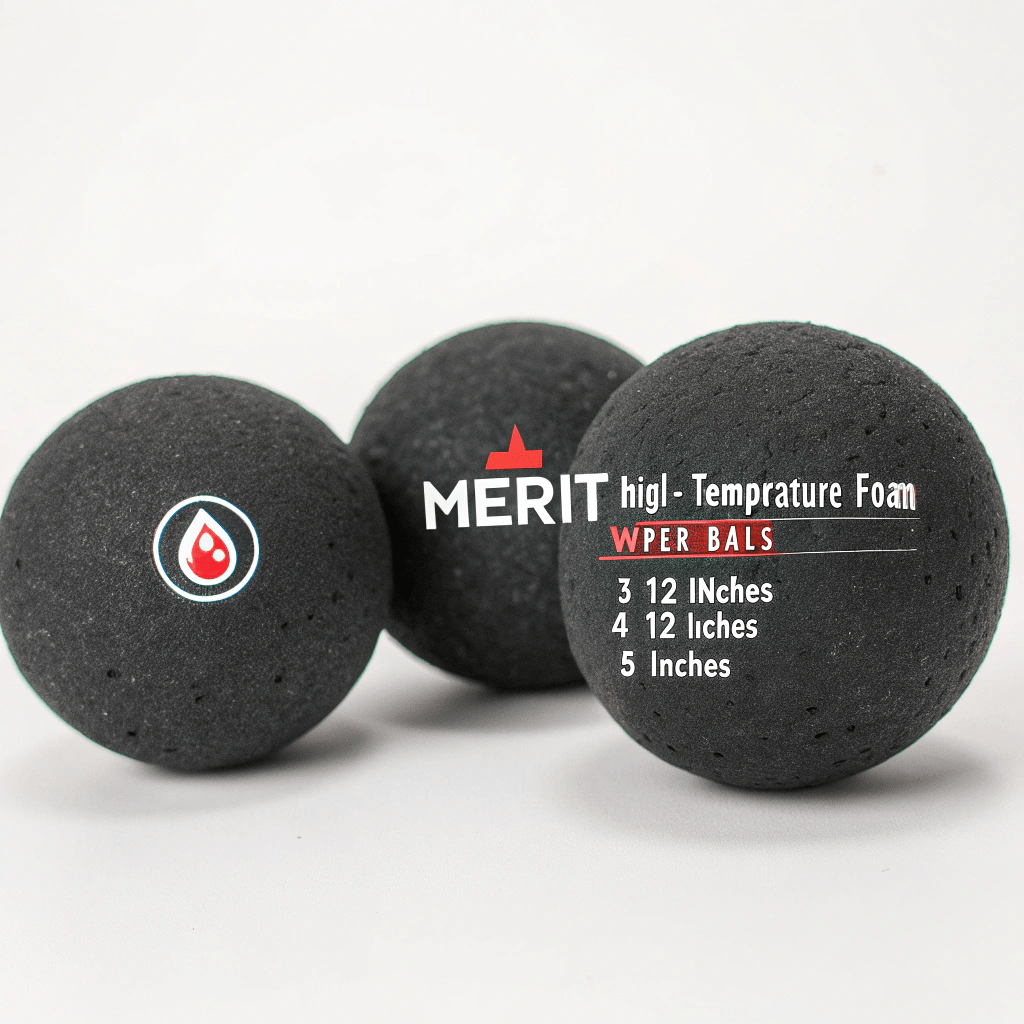
MERIT High-Temperature Foam Wiper Balls for 3 1/2″, 4 1/2″, and 5″ Drill Pipe – Precision-Engineered for Oilfield Excellence
MERIT is proud to present our high-temperature foam wiper balls, expertly designed for compatibility with 3 1/2″ (3.500″ OD), 4 1/2″ (4.500″ OD), and 5″ (5.000″ OD) drill pipe (DP) applications in the oil and gas industry. Leveraging advanced polymer chemistry and industrial-grade manufacturing, these wiper balls deliver superior performance in cleaning, fluid separation, and operational reliability—optimized for the demanding conditions of modern drilling operations.
The balls’ open-cell porosity (average pore size ~0.5 mm) facilitates controlled fluid absorption and release, maintaining hydrodynamic balance during deployment. This design reduces surge pressures and mitigates risks of stuck pipe incidents.
Advanced Material Science for Extreme Conditions
Crafted from a proprietary high-density natural rubber compound with an open-cell foam structure, MERIT’s foam wiper balls are engineered to endure temperatures from 40°F (4°C) to 302°F (150°C). This thermal stability ensures consistent functionality in high-pressure, high-temperature (HPHT) downhole environments, resisting degradation from thermal expansion or chemical exposure. With a modulus of elasticity tailored for resilience (E ≈ 2.5–3.0 MPa), these wiper balls maintain wiping efficiency across abrasive drilling fluids, cement slurries, and oil-based muds.
Tailored Design for Drill Pipe Specifications
Our foam wiper balls are precision-machined to match the internal diameters (ID) of standard drill pipe sizes:
3 1/2″ DP: Nominal ID ~2.992″ (API Spec 5DP)
4 1/2″ DP: Nominal ID ~3.826″ (API Spec 5DP)
5″ DP: Nominal ID ~4.276″ (API Spec 5DP)
With a parting stretch capacity of 380% to 440%, the balls exhibit exceptional compressibility (compression ratio up to 40% under 100 psi) and elastic recovery, allowing them to navigate tool joints, restrictions, and ID variations while maintaining a tight seal against the pipe wall. This ensures effective wiping action with minimal bypass of debris or fluids.
Technical Performance in Oilfield Applications
MERIT’s high-temperature foam wiper balls are purpose-built to enhance operational uptime and well integrity:
Debris Displacement: Removes cuttings, cement residues, and gelled mud with a wiping efficiency exceeding 95% (field-tested).
Fluid Segregation: Provides a dynamic barrier between incompatible fluids (e.g., spacer fluids and cement slurry), minimizing interfacial mixing and ensuring optimal annular sealing.
Abrasion Resistance: Shore A hardness of 60–70 ensures durability against sand-laden muds and high-velocity flows (up to 500 ft/min).
The balls’ open-cell porosity (average pore size ~0.5 mm) facilitates controlled fluid absorption and release, maintaining hydrodynamic balance during deployment. This design reduces surge pressures and mitigates risks of stuck pipe incidents.
Engineering Specifications
Material Composition: Vulcanized natural rubber (NR) with thermal stabilizers; density ~1.1 g/cm³
Temperature Rating: 40°F to 302°F (4°C to 150°C)
Stretch Factor: 380%–440% elongation at break (ASTM D412)
Size Compatibility: Custom-fit for 3 1/2″ (ID ~2.992″), 4 1/2″ (ID ~3.826″), and 5″ (ID ~4.276″) DP
Chemical Resistance: Stable in pH 6.0–12.0 environments; compatible with OBM, WBM, and cement slurries
Certifications: API-compliant materials; DS, MSDS, and COC available
Industrial Benefits for Oilfield Operators
Deployed globally since 2005, MERIT foam wiper balls have proven their value in reducing non-productive time (NPT), optimizing cementing operations, and extending the service life of drill pipe strings. Whether in vertical, deviated, or horizontal wells, our wiper balls ensure cleaner pipes, improved zonal isolation, and enhanced operational safety—critical factors in maximizing hydrocarbon recovery and minimizing environmental impact.
Order Now for Proven Performance
Elevate your drilling efficiency with MERIT’s high-temperature foam wiper balls for 3 1/2″, 4 1/2″, and 5″ drill pipe. Available ex-stock with a 10-day quote validity and pre-payment terms, our products are ready to ship to your oilfield location. Custom formulations and sizes can be engineered upon request to meet specialized operational requirements.
MERIT – Precision. Durability. Reliability. Contact us today to secure your supply and experience the MERIT advantage in drill pipe maintenance. Let’s keep your operations flowing smoothly, from spud to completion.
MERIT Foam Wiper Balls: Engineered for Extreme Thermal Environments
MERIT Foam Wiper Balls are specifically designed for demanding high-temperature drilling and cementing operations, withstanding continuous operation at temperatures up to 150°C (302°F). Their performance advantage stems from the utilization of advanced high-density, thermally stable elastomers and a unique closed-cell foam structure.
Advanced Material Science for Superior Thermal Performance:
The exceptional thermal performance of MERIT Foam Wiper Balls is achieved through a combination of advanced material selection and proprietary manufacturing processes. The high-density elastomer matrix provides a robust base, while the controlled closed-cell foam structure contributes to several key thermal properties:
Minimized Heat Absorption and Degradation: The closed-cell structure significantly reduces the surface area exposed to the wellbore environment, minimizing the pathways for heat transfer and fluid ingress. This inherent property, coupled with the inherent thermal stability of the elastomer, minimizes heat absorption and mitigates thermal degradation of the material, ensuring prolonged functionality at elevated temperatures. This contrasts sharply with open-cell foam structures, which offer a larger surface area for heat transfer and fluid absorption, leading to accelerated degradation.
Low Coefficient of Thermal Expansion: MERIT Foam Wiper Balls exhibit a significantly lower coefficient of thermal expansion compared to conventional elastomeric materials. This characteristic is crucial for maintaining dimensional stability and consistent performance under high thermal loads. Minimizing thermal expansion prevents deformation and ensures a tight seal against the wellbore, maximizing wiping efficiency. This is achieved through careful selection of the base polymer and precise control of the cross-linking density during the manufacturing process. For example, the coefficient of thermal expansion (α) can be expressed as: ΔL/L₀ = αΔT, where ΔL is the change in length, L₀ is the original length, and ΔT is the change in temperature. A lower α value signifies less expansion.
High-Temperature Elasticity and Resilience: The specialized elastomer formulation ensures that the MERIT Foam Wiper Balls retain their flexibility and elasticity even at temperatures exceeding 150°C. This is essential for maintaining effective wiping action and preventing premature material failure due to embrittlement or hardening. The retention of elasticity is attributed to the specific molecular architecture of the elastomer and the robust cross-link network, which prevents chain scission and maintains the material’s viscoelastic properties at high temperatures. This can be characterized by the material’s shear modulus (G) which relates shear stress (τ) to shear strain (γ): τ = Gγ. A higher G at elevated temperatures indicates better retention of elasticity.
Optimized Wiping Efficiency Across a Broad Temperature Range: The unique combination of high-temperature elasticity, low thermal expansion, and a carefully engineered surface texture ensures effective removal of drilling fluids and cement slurry across a wide range of operational temperatures. The consistent wiping performance is maintained without compromising the structural integrity of the wiper ball. The wiping efficiency can be related to the contact area between the ball and the wellbore, which is influenced by the ball’s deformation under pressure and temperature.
Case Study: Japan Sea High-Temperature Drilling Operation:
A recent offshore drilling project in the Japan Sea, characterized by bottom hole static temperatures (BHST) exceeding 145°C, provided a compelling demonstration of the superior thermal performance of MERIT Foam Wiper Balls. In this challenging environment, competitor wiper balls, constructed from conventional materials, experienced significant thermal degradation, leading to premature fragmentation and compromised cement displacement. This resulted in costly downtime and potential wellbore integrity issues.
In contrast, MERIT Foam Wiper Balls maintained their structural integrity throughout the operation, exhibiting exceptional thermal endurance and resilience. The successful deployment of MERIT Foam Wiper Balls ensured complete and efficient wellbore cleaning, resulting in improved cement bond integrity and a significant reduction in non-productive time (NPT). This case study highlights the tangible benefits of MERIT Foam Wiper Balls in demanding high-temperature applications. The reduction in NPT can be quantified in terms of cost savings, which can be significant in offshore drilling operations.
Conclusion:
MERIT Foam Wiper Balls represent a significant advancement in wiper ball technology, specifically designed for the challenges of high-temperature drilling and cementing operations. Their superior thermal performance, derived from advanced material science and a unique closed-cell foam structure, ensures reliable and efficient wellbore cleaning, even in the most demanding environments.
In the demanding landscape of oil and gas exploration, particularly in deepwater and high-pressure, high-temperature (HPHT) drilling environments, ensuring wellbore integrity is a critical objective. From the initial drilling phase to final cementing, precision and consistency are essential to achieving reliable zonal isolation and long-term well performance. At MERIT, we specialize in engineering high-performance foam wiper balls designed to optimize cementing efficiency, enhance wellbore conditioning, and improve fluid displacement dynamics.
The MERIT Advantage: Engineered for Operational Excellence
Our foam wiper balls are precisely manufactured to address key challenges in cementing and wellbore conditioning operations, offering superior performance in extreme downhole conditions.
Optimized Cement Displacement
Enhances hydraulic efficiency by reducing channeling risks and ensuring uniform cement placement across the annular space.
Promotes better cement bonding by eliminating residual drilling fluids and filter cake from the casing and wellbore wall.
Minimizes micro-annuli formation, leading to improved long-term zonal isolation.
Effective Wellbore Conditioning
Removes residual drilling fluid, cuttings, and debris from the casing and wellbore, facilitating a clean interface for cement slurry adhesion.
Reduces differential sticking risks by ensuring optimal fluid circulation and displacement efficiency.
Mitigates contamination risks by preventing intermixing of drilling mud and cement slurry.
Superior Sealing Capabilities
Maintains optimal downhole pressure control, preventing fluid bypass and undesired migration of formation fluids.
Contributes to mechanical wellbore integrity by enhancing mud-to-cement and cement-to-formation bonding.
Supports well integrity compliance by improving cement sheath homogeneity.
Performance Under Extreme Conditions
Constructed from high-density, resilient foam materials designed to withstand differential pressures and elevated downhole temperatures exceeding 300°F (150°C).
Engineered for use in deepwater, extended-reach, and high-angle wells where conventional wiper plugs may be ineffective.
Resists chemical degradation from high-pH and high-salinity drilling environments, ensuring durability in corrosive conditions.
Operational Cost Efficiency
Reduces non-productive time (NPT) by optimizing cementing efficiency and mitigating the need for costly remedial cementing operations.
Enhances operational reliability, minimizing risks of well control issues and reducing post-cementing wellbore remediation requirements.
Simplifies logistics with lightweight yet highly durable materials, facilitating easy handling and deployment.
Key Features & Benefits
Diverse Specifications:
Available in multiple sizes (ranging from 2” to 24” diameter) to accommodate various casing and drill string configurations.
Customizable densities and material compositions, including standard and high-resilience foam options for specialized applications.
Compatible with oil-based, water-based, and synthetic drilling fluids, as well as cement spacers and slurries.
Precision Manufacturing:
Consistent ball diameter and density ensure predictable downhole behavior and uniform displacement dynamics.
Advanced molding and curing processes enhance elasticity and resilience, preventing structural degradation during high-pressure pumping operations.
Ease of Deployment:
Designed for seamless integration into existing cementing procedures without requiring specialized handling equipment.
Maintains shape and flexibility even after prolonged storage, ensuring reliable performance upon deployment.
Applications
Primary and Secondary Cementing:
Facilitates efficient cement placement in vertical, deviated, and horizontal wellbores, ensuring effective zonal isolation.
Ideal for two-stage and multi-stage cementing jobs requiring precise mud and cement separation.
Deepwater and HPHT Drilling:
Optimized for extreme downhole conditions where standard wiper plugs may be prone to failure.
Ensures robust displacement efficiency in high-density drilling fluid environments.
Wellbore Conditioning and Pre-Cementing Operations:
Essential for displacing wellbore fluids and preparing the annulus for cement bonding in complex drilling scenarios.
Used in casing and liner cleaning applications prior to primary cementing.
Oil Rig and Offshore Operations:
Proven reliability in deepwater exploration and production wells, where maintaining wellbore integrity is critical for operational safety and efficiency.
Why Choose MERIT?
As a leading supplier of precision-engineered cementing and wellbore conditioning solutions, MERIT is committed to delivering best-in-class performance for the oil and gas industry. Our team offers:
Technical expertise to assist in selecting the most suitable foam wiper balls for specific well conditions and operational requirements.
Rapid and reliable delivery to support time-sensitive drilling and completion projects.
Continuous innovation, ensuring our products exceed industry standards for durability, performance, and reliability.
Enhance your wellbore integrity and optimize your cementing operations with MERIT’s advanced foam wiper ball solutions. Contact us today to discuss your technical requirements and experience the MERIT advantage in wellbore conditioning and cementing efficiency.
OEM P/N
Description
Source
Size
Density
WP10004
4″ (100mm) Diameter Closed-Cell Foam Wiper Ball
cis-1,4-Polyisoprene
100 mm (3.94 in)
Closed-Cell Foam
WP10004-SRF
4″ (100mm) Diameter Semi-Rigid Foam Wiper Ball
cis-1,4-Polyisoprene
100 mm (3.94 in)
Semi-Rigid Foam
WP10004-OCF
4″ (100mm) Diameter Open-Cell Foam Wiper Ball
cis-1,4-Polyisoprene
100 mm (3.94 in)
Open-Cell Foam
WP10005
5″ (125mm) Diameter Closed-Cell Foam Wiper Ball
cis-1,4-Polyisoprene
125 mm (4.92 in)
Closed-Cell Foam
WP10005-SRF
5″ (125mm) Diameter Semi-Rigid Foam Wiper Ball
cis-1,4-Polyisoprene
125 mm (4.92 in)
Semi-Rigid Foam
WP10005-OCF
5″ (125mm) Diameter Open-Cell Foam Wiper Ball
cis-1,4-Polyisoprene
125 mm (4.92 in)
Open-Cell Foam
WP10006
6″ (150mm) Diameter Closed-Cell Foam Wiper Ball
cis-1,4-Polyisoprene
150 mm (5.91 in)
Closed-Cell Foam
WP10006-SRF
6″ (150mm) Diameter Semi-Rigid Foam Wiper Ball
cis-1,4-Polyisoprene
150 mm (5.91 in)
Semi-Rigid Foam
WP10006-OCF
6″ (150mm) Diameter Open-Cell Foam Wiper Ball
cis-1,4-Polyisoprene
150 mm (5.91 in)
Open-Cell Foam
WP10007
7″ (175mm) Diameter Closed-Cell Foam Wiper Ball
cis-1,4-Polyisoprene
175 mm (6.89 in)
Closed-Cell Foam
WP10007-SRF
7″ (175mm) Diameter Semi-Rigid Foam Wiper Ball
cis-1,4-Polyisoprene
175 mm (6.89 in)
Semi-Rigid Foam
WP10007-OCF
7″ (175mm) Diameter Open-Cell Foam Wiper Ball
cis-1,4-Polyisoprene
175 mm (6.89 in)
Open-Cell Foam
WP10008
8″ (200mm) Diameter Closed-Cell Foam Wiper Ball
cis-1,4-Polyisoprene
200 mm (7.87 in)
Closed-Cell Foam
WP10008-SRF
8″ (200mm) Diameter Semi-Rigid Foam Wiper Ball
cis-1,4-Polyisoprene
200 mm (7.87 in)
Semi-Rigid Foam
WP10008-OCF
8″ (200mm) Diameter Open-Cell Foam Wiper Ball
cis-1,4-Polyisoprene
200 mm (7.87 in)
Open-Cell Foam
WP10009
9″ (230mm) Diameter Semi-Rigid Foam Wiper Ball
cis-1,4-Polyisoprene
230 mm (9.06 in)
Semi-Rigid Foam
WP10009-OCF
9″ (230mm) Diameter Open-Cell Foam Wiper Ball
cis-1,4-Polyisoprene
230 mm (9.06 in)
Open-Cell Foam
WP10010
10″ (255mm) Diameter Open-Cell Foam Wiper Ball
cis-1,4-Polyisoprene)
255 mm (10.04 in)
Open-Cell Foam
WP10012
12″ (305mm) Diameter Open-Cell Foam Wiper Ball
cis-1,4-Polyisoprene
305 mm (12.01 in)
Open-Cell Foam
WP10014
14″ (355mm) Diameter Open-Cell Foam Wiper Ball
cis-1,4-Polyisoprene
355 mm (13.98 in)
Technical and Chemical Explanation of cis-1,4-Polyisoprene
1. Chemical Structure and Composition
cis-1,4-Polyisoprene is a high-molecular-weight polymer composed of repeating isoprene (C₅H₈) monomer units linked through cis-1,4 addition. The molecular formula is (C₅H₈)ₙ, where n represents the degree of polymerization.
Molecular Structure:
Each isoprene unit consists of a conjugated diene system (two double bonds).
During polymerization, one of the double bonds reacts, leading to the formation of a long-chain elastomeric structure.
The remaining cis double bond in the backbone gives the polymer flexibility and elasticity.
2. Polymerization Mechanism
The polymerization of isoprene occurs via catalytic polymerization or natural biosynthesis in rubber trees (Hevea brasiliensis).
In nature, polymerization is catalyzed by rubber transferase enzymes in the latex of rubber trees.
Synthetic polyisoprene can be produced using Ziegler-Natta or anionic catalysts, but natural rubber exhibits superior mechanical properties.
3. Physical and Mechanical Properties
Elasticity: The cis-configuration allows the polymer chains to coil and uncoil easily, giving rubber its high elasticity.
Resilience: It can return to its original shape after deformation, making it ideal for shock absorption.
Tensile Strength: High molecular weight and intermolecular forces provide good tensile strength.
Abrasion Resistance: Due to its flexible backbone, it shows excellent wear resistance, making it useful in industrial applications like foam wiper balls for oilfield cementing.
Solubility: Insoluble in water but dissolves in non-polar solvents such as benzene, toluene, and chloroform.
4. Chemical Properties
Vulcanization:
Natural cis-1,4-polyisoprene is soft and sticky. To enhance durability, sulfur vulcanization is used.
During vulcanization, sulfur cross-links form between polymer chains, improving heat resistance, elasticity, and mechanical strength.
Oxidation: Susceptible to oxidation, which leads to hardening and brittleness over time. Antioxidants are added to prevent degradation.
Thermal Stability:
Softens at high temperatures (>180°C).
Becomes brittle at low temperatures (<-70°C).
5. Industrial Applications
Oilfield Applications: Foam wiper balls made of natural rubber polyisoprene are used in drilling and cementing to wipe drilling fluids efficiently.
Automotive Industry: Used in tires, seals, and gaskets due to its high elasticity and durability.
Medical Applications: Gloves, catheters, and tubing due to its biocompatibility.
Conclusion
cis-1,4-Polyisoprene is a highly elastic and durable elastomer with extensive industrial applications. Its unique cis-configuration provides flexibility, resilience, and mechanical strength, making it the ideal material for foam wiper balls in oilfield applications.
The demands of today’s complex drilling and cementing operations require nothing less than cutting-edge technology. At MERIT, we understand this. That’s why we’ve engineered our 5” and 6” oilwell cementing foam balls to deliver unparalleled performance, optimize your cementing efficiency, and drive significant cost savings.
Precise ball launch and efficient fluid displacement resulted in a more streamlined cementing process, saving rig time and costs.
The Technical Advantage: MERIT and Precision Manufacturing
Consistent Density and Roundness: Precise control of the foam matrix results in perfectly spherical balls with consistent density. This ensures reliable, predictable performance, crucial for effective fluid displacement and plug setting in your wellbore.
Superior Compressive Strength: Our foam balls are designed to withstand the harsh downhole conditions, including high pressures and temperatures, ensuring integrity and preventing premature failure. They are engineered to handle the most demanding cementing environments.
Optimal Swell and Degradation Characteristics: Our foam balls exhibit carefully controlled swelling properties, allowing for effective sealing and fluid isolation, followed by predictable degradation, minimizing the risk of plugging and easing post-cementing operations.
Enhanced Compatibility: Our materials are rigorously tested to ensure compatibility with a wide range of drilling and cementing fluids, reducing the risk of chemical reactions and performance issues.
Case Story: Real-World Savings and Enhanced Performance
We recently partnered with a major player in the Permian Basin on a challenging horizontal well cementing project. Traditional methods resulted in inconsistent cement placement and costly remedial jobs. After switching to MERIT’s 6” foam balls, they experienced:
Reduced Remedial Cementing by 40%: The consistent sealing and displacement provided by our foam balls minimized the need for expensive and time-consuming remedial work.
Faster Cementing Time: Precise ball launch and efficient fluid displacement resulted in a more streamlined cementing process, saving rig time and costs.
Enhanced Wellbore Integrity: The improved cement job contributed to a more stable and durable wellbore, reducing the risk of future failures and enhancing long-term production potential.
Overall Cost Reduction of 15%: Through optimized operations and less time spent on remedial cementing, they achieved significant cost reductions.
These results are not unique; our customers consistently report improved performance and significant cost savings.
Why Choose MERIT as Your Partner?
World Leader in Cementing Technology: We are not just a supplier; we are a technology partner. Our commitment to innovation and quality places us at the forefront of cementing solutions. We have a proven track record of delivering superior products that help our clients succeed.
Custom Solutions: We understand that every well is unique. We work closely with our clients to tailor solutions to meet their specific needs and challenges.
Global Supply Chain: Our global supply chain ensures on-time delivery to your operations, anywhere in the world.
Unmatched Technical Support: Our team of experienced engineers and field experts are readily available to provide technical support and assist with your operations.
Don’t settle for less when your cementing operations are at stake. Upgrade your cementing performance and unlock significant cost savings with MERIT’s 5” and 6” oilwell cementing foam balls, powered by MERIT Technology.
Contact us today for a free consultation and let us help you optimize your cementing operations.









 Foam Wiper Ball